
 Medialab-Matadero Madrid
Júlia Nueno, faculty of LAB 5 The Mechanics of Truth
About Júlia Nueno
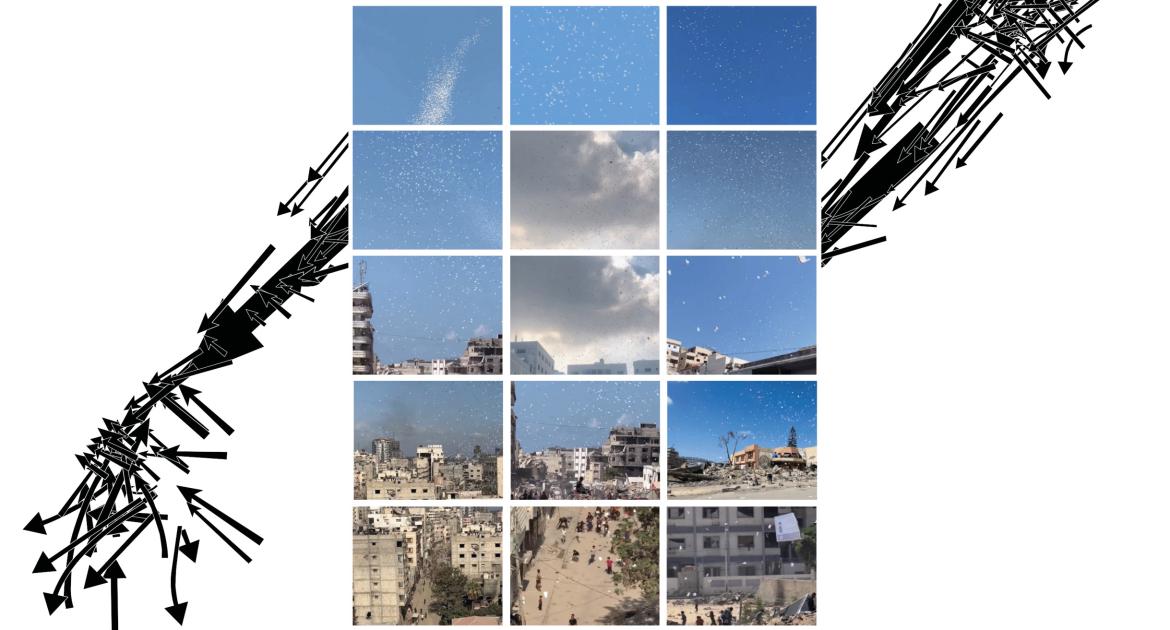
Júlia Nueno Guitart is a researcher and computational designer.
In her work, she reads algorithmic systems through the spaces they produce: tracing how short-term rental platforms quietly reorganise Barcelona's housing stock, building tools with delivery workers to turn their own exploitation data against the platforms that extract it, or in the development spatial methodologies to interrogate the use of AI by the Israeli military in Gaza.
“The political question underneath returns to the same place, and I find it genuinely unresolved: who gets to produce truth, under what conditions, and with what tools? ”
She is currently a member of the Forensic Architecture team and is pursuing her PhD at the Centre for Research Architecture at Goldsmiths (University of London.) She is the editor of "Genocidios. Una lectura forense", a collective volume published by Galaxia Gutenberg (Barcelona, 2025). Her articles and columns have been published on renowned media outlets such as The Guardian, Der Spiegel, VICENews, Springerin, FabrikZeitung and VersoBlog.
Introduction to The Mechanics of Truth
You can read here Júlia's introductory text about the conceptual framework of The Mechanics of Truth:
Júlia at OpenLAB
Júlia Nueno will participate at the OpenLAB The Mechanics of Truth festival on Thursday November 26 at 6:45pm in Matadero's Nave Una with the intervention Computational infrastructures, violence, forensic methodologies:
Not long ago, censorship announced itself through absence: a film cut short, a book quietly vanished, a song that only existed on pirate tapes. These erasures were legible. That kind of power, however brutal, was at least locatable.
Digital culture has inverted the logic. Censorship no longer suppresses, it exceeds. Steve Bannon put it bluntly: flood the zone with shit. Voices aren't silenced but multiplied into indistinction, and the boundary between news and viral lies, between opinion and hate speech, dissolves into permanent cognitive dissonance. As Mark Fisher warned, oversaturation doesn't radicalise, it exhausts, pulling us from irony into cynicism, and finally into resignation.
Between social research and engineering, Júlia traces how power hides inside the technical, reading algorithmic systems through the spaces they produce: short-term rental platforms quietly reorganising Barcelona's housing stock, tools built with delivery workers to turn their own data against the platforms that extract it, spatial methodologies interrogating the Israeli military's use of AI in Gaza. The question underneath remains unresolved: who gets to produce truth, under what conditions, and with what tools?
Check here the whole programme of the OpenLAB The Mechanics of Truth festival.