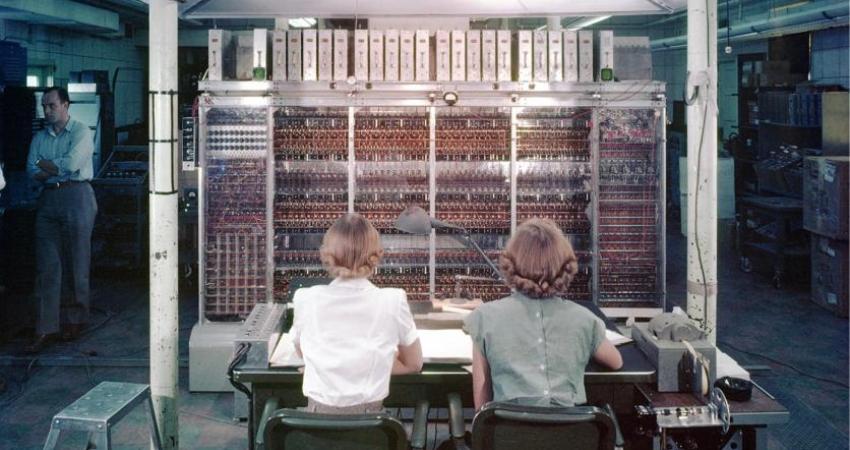
AI Futures is an agile reading group and an incubator for a learning community — a space to explore recent, especially relevant texts and think collectively about how artificial intelligence is transforming everyday life, work, culture, democracy, and the use of resources.
In a hyper-accelerated context where AI tends to shut down debate under the promise of efficiency, reading together becomes a real alternative to technological acceleration and the delegation of judgment, criteria, and responsibility. We are reading in order to understand — and, possibly, to act.
The reading group is coordinated by researcher, curator, and critical-cartography expert Pablo DeSoto, in collaboration with Medialab Matadero curator Bani Brusadin.
Schedule
Biweekly online sessions:
Tuesday 6/10, 18.30
Tuesday 20/10, 18.30
Tuesday 3/11, 18.30
Tuesday 10/11, 18.30
Saturday 28/11, in-person presentation session as part of the OpenLAB festival
Participants based in Madrid may meet in person at Medialab Matadero (by prior notice to proyectoslab@medialab-matadero.es at least 3–4 working days in advance).
Registration
Participation in each session is free and open, with no prior registration required.
In a context of technological acceleration and promises of efficiency, reading together is a way of pausing. Here, reading becomes a civic infrastructure: a space to recognize the ideologies, metaphors, and power relations that already organize the public sphere, culture, and labour through algorithmic systems.
No technical knowledge or expert standing is required. The group is open to artists, people from the cultural, educational, and social fields, and anyone interested in understanding and debating the role of AI in shared life. We want to build a community capable of asking uncomfortable questions, sharing critical tools, and imagining other possible relationships with technology.
In keeping with Medialab Matadero's tradition, this Research Unit (RU) understands reading as a public practice and community as a framework for collective learning.
We believe that engaging with how these systems actually work, and understanding their logical, philosophical, economic, and cultural foundations, should be essential literacy for any 21st-century citizen. That's why each session takes a book as a shared starting point. Building on the author's ideas, we want to discuss recent information, news, and data. We are not looking for closed answers, but rather to build a solid, shared body of knowledge — one grounded in first-hand information and reflection on grey areas, challenges, opportunities, and alternative paradigms.
Each session poses specific questions or themes as a starting point.
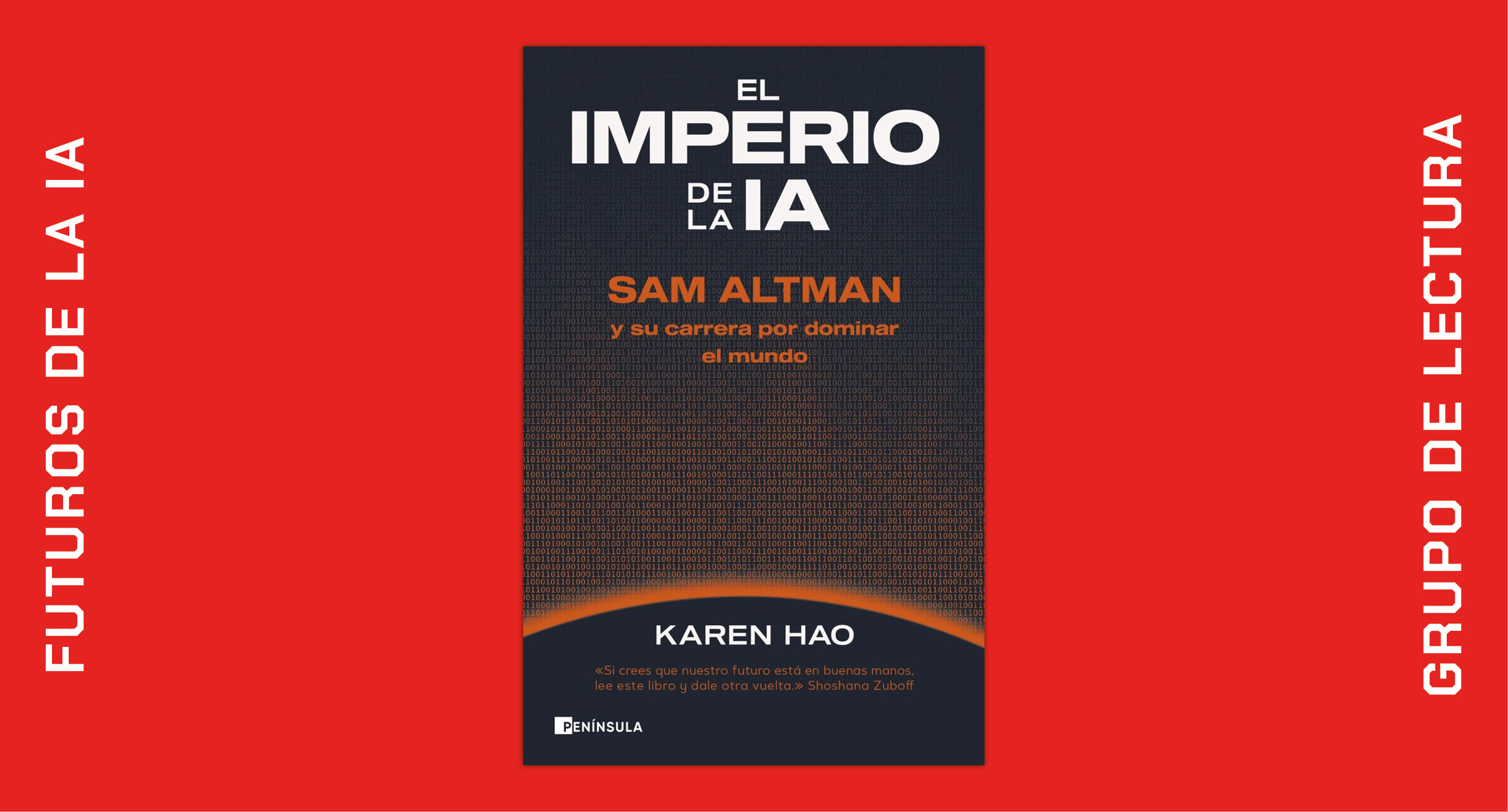
Suggested minimum reading: the full book (as far as each person can get)
Does AI necessarily require large corporations, data concentration, and massive resource consumption? What forms of labour, knowledge, and care are rendered invisible when we speak of "automation"? Is there a single idea of "artificial general intelligence," or several competing ones? Why might the one promoted by a company like OpenAI not be the only possible one? Who benefits from this narrative? What kind of AI enables, or could enable, personal autonomy, collective self-management, and decentralization?
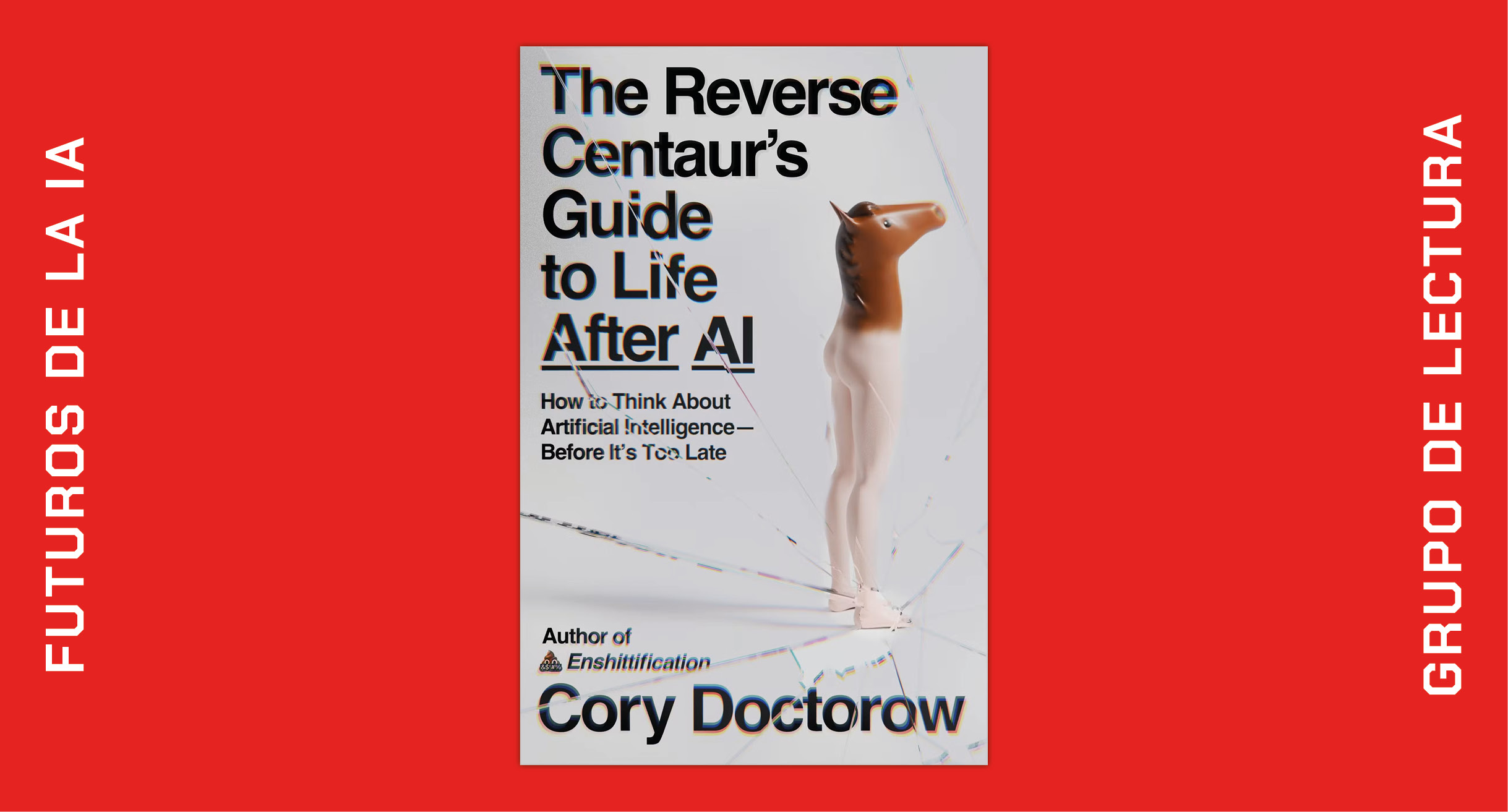
Suggested minimum reading: the full book (it's short)
To what extent is today's AI industry, more than a technological revolution, a massive financial operation applied to key infrastructures? Is this different from what happened in earlier eras with other technologies (cars, television, aviation, satellites)? What role do hype and trends play in the common understanding of AI and in its own technical development? What does it mean for a technology to be "inevitable," and who benefits from us understanding it that way? When does a tool extend us, and when does it turn us into an appendage or assistant of a machine?
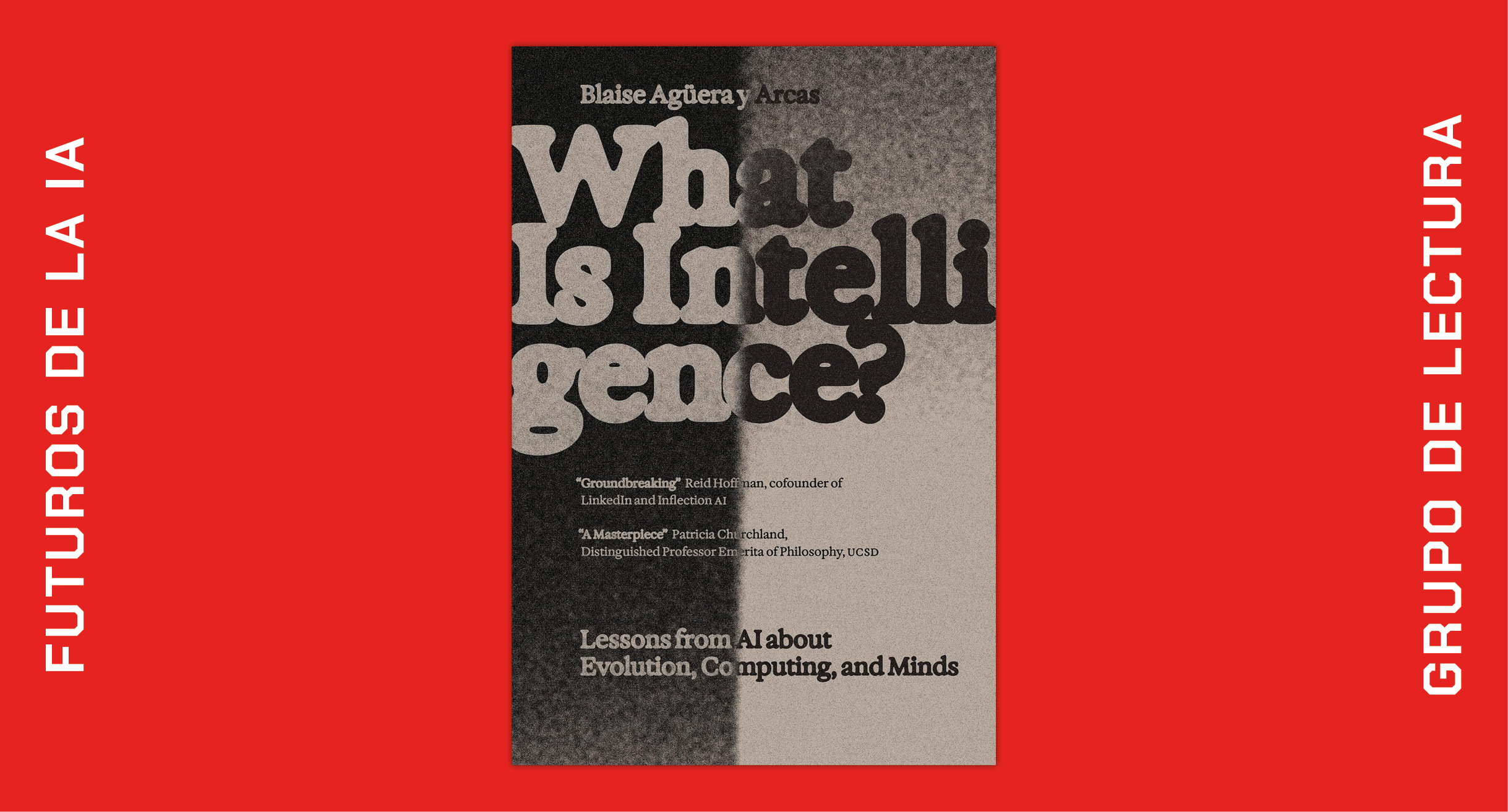
Suggested minimum reading: introduction and one chapter of your choice → available at https://whatisintelligence.antikythera.org/
What ideas about the mind, evolution, and life are inscribed in AI systems? What are the social consequences of treating intelligence as something measurable, comparable, and optimizable? Is computation a form of intelligence? Who benefits from these approaches? What kind of world do they design? What is intelligence for Google?
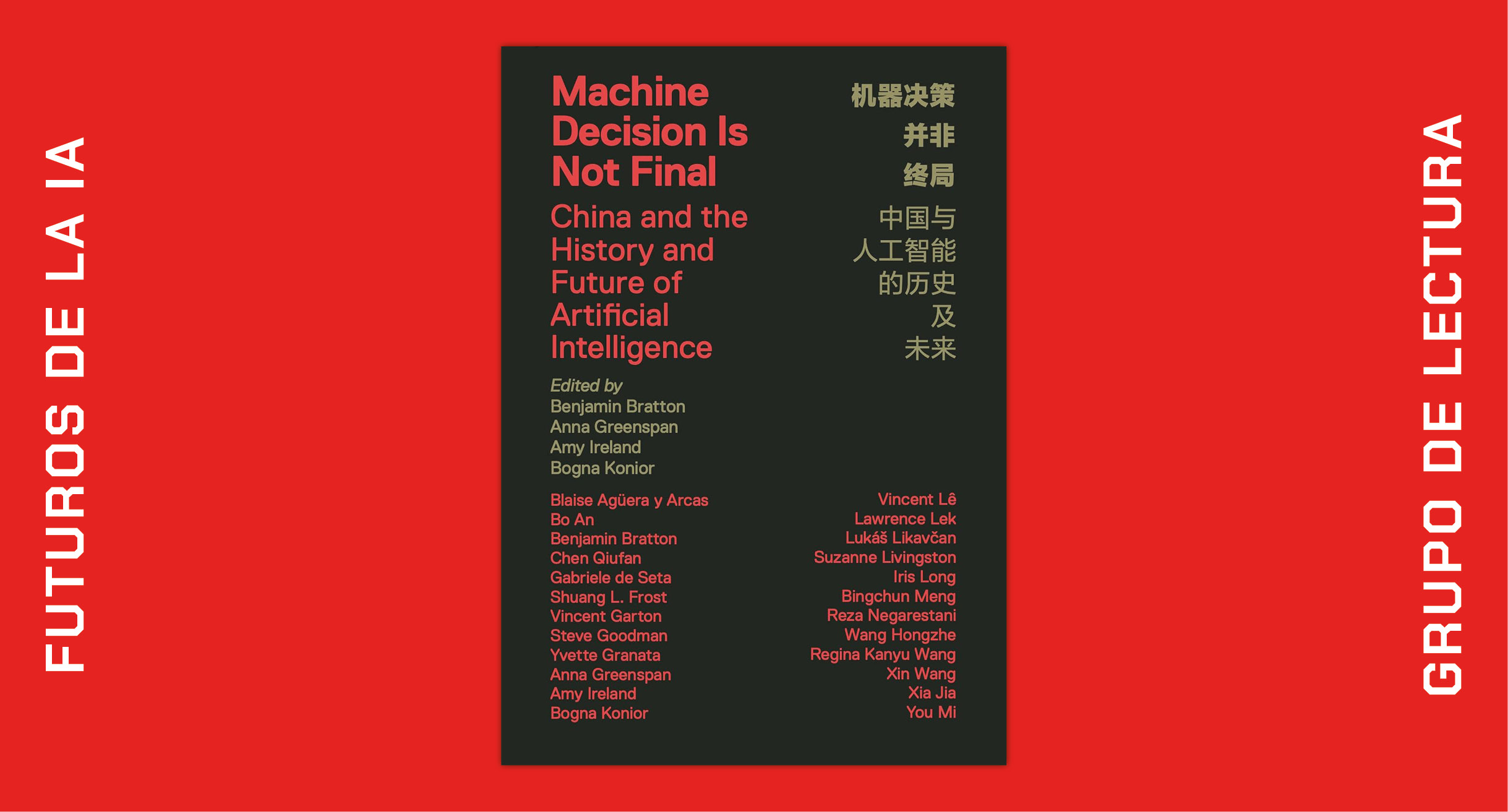
Suggested minimum reading: introduction and one chapter of your choice
Are there technologies necessarily bound to specific cultures or cosmologies? Is there a Western AI culture and a Chinese one, or rather a single planetary AI culture? What are the risks of thinking of Europe, China, and the United States as homogeneous technological blocs? Does it make sense to fight for a "European AI"?
Pablo DeSoto works at the intersection of art, science, technology, and society, examining how artists, citizens, and machines are reimagining the infrastructures of life in the age of AI and planetary transformation. Drawing on critical cartography, his practice explores the relationships between the Anthropocene, digital technology, and social change through writings, exhibitions, and public programmes that foster critical thought and imagination.
Between 2022 and 2025 he was director of LABoral Centro de Arte y Creación Industrial, running a public programme of popular experimentalism and curating the exhibitions Millennials, Digital Machines, The Cathedral of Rain, The World Is a Forest, and Barricades in the Ice. During that period the centre tripled its visitor numbers, opening a total of 22 exhibitions including Engines of Climate, Impossible Rainbow, Rodrigo Cuevas: The Grace of Folkloric Agitation, Asturian Art in Residence 2023, NVSBLS, Aida Rivero, Parasimón, An Elastic Continuum: Rubber, Gender, and Power, Plastic Ocean, Back to the Heart, OPTX.DRIPS, Hardly Working, Hybrids, Gijón Photography Encounters, Ars Electronica Animation Festival 2021 on Tour, Plug-in Habitat, and Vacacional.
He holds a Master's in Architecture from the Royal Institute of Technology in Stockholm and a PhD in Communication and Culture from the Federal University of Rio de Janeiro. He is the editor of 5 books and the author of more than 30 publications, including books, academic articles, book chapters, and monographs.
His work in the field of contemporary artistic practices has been recognized with the international ARTEC award from the Norwegian University of Science and Technology, LAB_Cyberspaces, DKV LABoral, the Elinor Ostrom award from the University of Buenos Aires, LAB_Jóven Experimenta, and residencies at Tokyo Wonder Site and Cairo Townhouse Gallery.
He has run programmes at SESC São Paulo, the Andalusian Centre for Contemporary Art, London's Chelsea College of Arts, and the Valencia Centre for Contemporary Culture, among others.
He has taught at the Umeå University School of Arts and Communication, the Federal University of Paraíba, and the AA Visiting School of the Melbourne School of Design. He has been an invited speaker at Ars Electronica Post City Lab Seoul, the Creative Time Summit Miami, Tate Modern, the Royal Academy of Arts London, MACBA, CCCB, MediaLab Prado, and Het Nieuwe Instituut in Rotterdam. His work has been featured in El País, El Mundo, Libération, RTVE Metrópolis, RTVE, and We Make Money Not Art.
He is co-founder of hackitectura.net (2002–2011), a team of artists, hackers, and activists whose work has been shown in prestigious international exhibitions including ZKM, MNCARS, LABoral, the National Museum of Contemporary Art of Greece, and BIACS: YOUniverse, curated by Peter Weibel.

 Medialab-Matadero Madrid