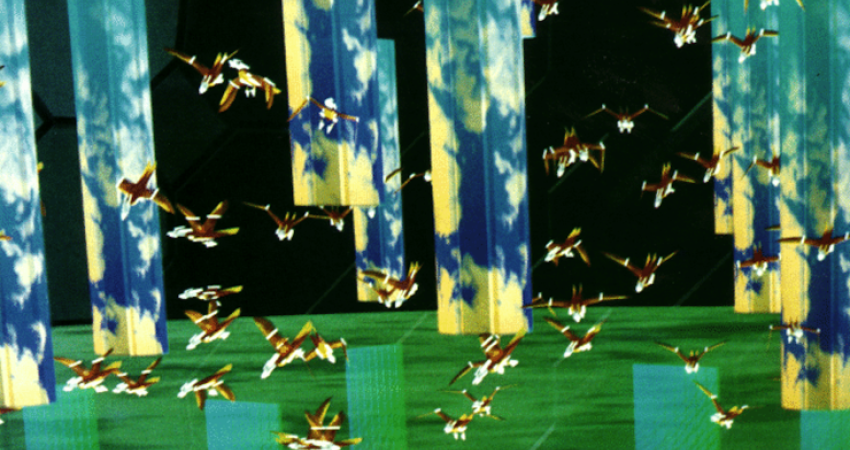
Computer simulation of a bird flock. Craig W. Reynolds, in “Flocks, Herds, and Schools. A Distributed Behavioral Model,” Computer Graphics 21, n.º 4...
The Digital Gesture: On the Magic Condition of Technique is a research project that examines the legitimacy and veracity of knowledge-production systems based on artificial intelligence. It departs from a historical and genealogical analysis that links the development of AI to the origins of robotics and the creation of the first automatas in the seventeenth century. Both technologies (AI and automata) rely on an illusionistic effect that blends science and magic, generating both trust and distrust among non-specialized audiences. The research operates within the situated context of Madrid, revealing the relationship between the city and the machinic. The Digital Gesture triggers and unfolds questions as: how do automatization systems work? How do they shape the context we inhabit? Which narratives legitimize their use? Is magic a language that can serve to claim an alternative technological narrative?
Andrea Muniáin (Tudela, 1994), architect and visual artist, and Paula Ramos Mollá (Santa Cruz de Tenerife, 1994), philosopher, curator and producer, collaborate since 2018 in projects across art, visual studies and technology. Their joined work is focues on the critical research of the digital systems of knowledge and digital image production. Based in Madrid and Amsterdam respectively, they are co-editors of the book El Giro Fotogramétrico: truncando el 3D (Bartlebooth), a result of the reserch project Apuntes Truncados.
20 May 2026, from 14h to 18h
Stagecraft, technology and magic. Visit to Amazon
13 June 2026, from 12h to 17.30h
Stagecraft, technology and magic. Seminar, with Marta Peirano, Ariana Dongus and Ricardo Sánchez.

 Medialab-Matadero Madrid