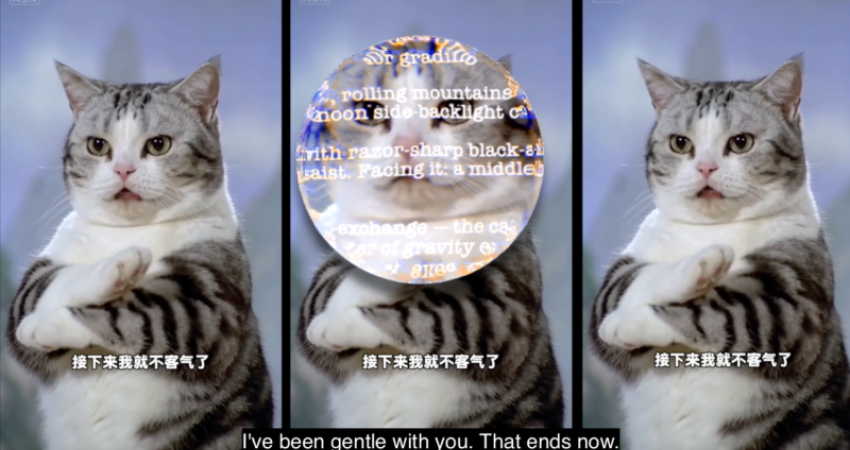
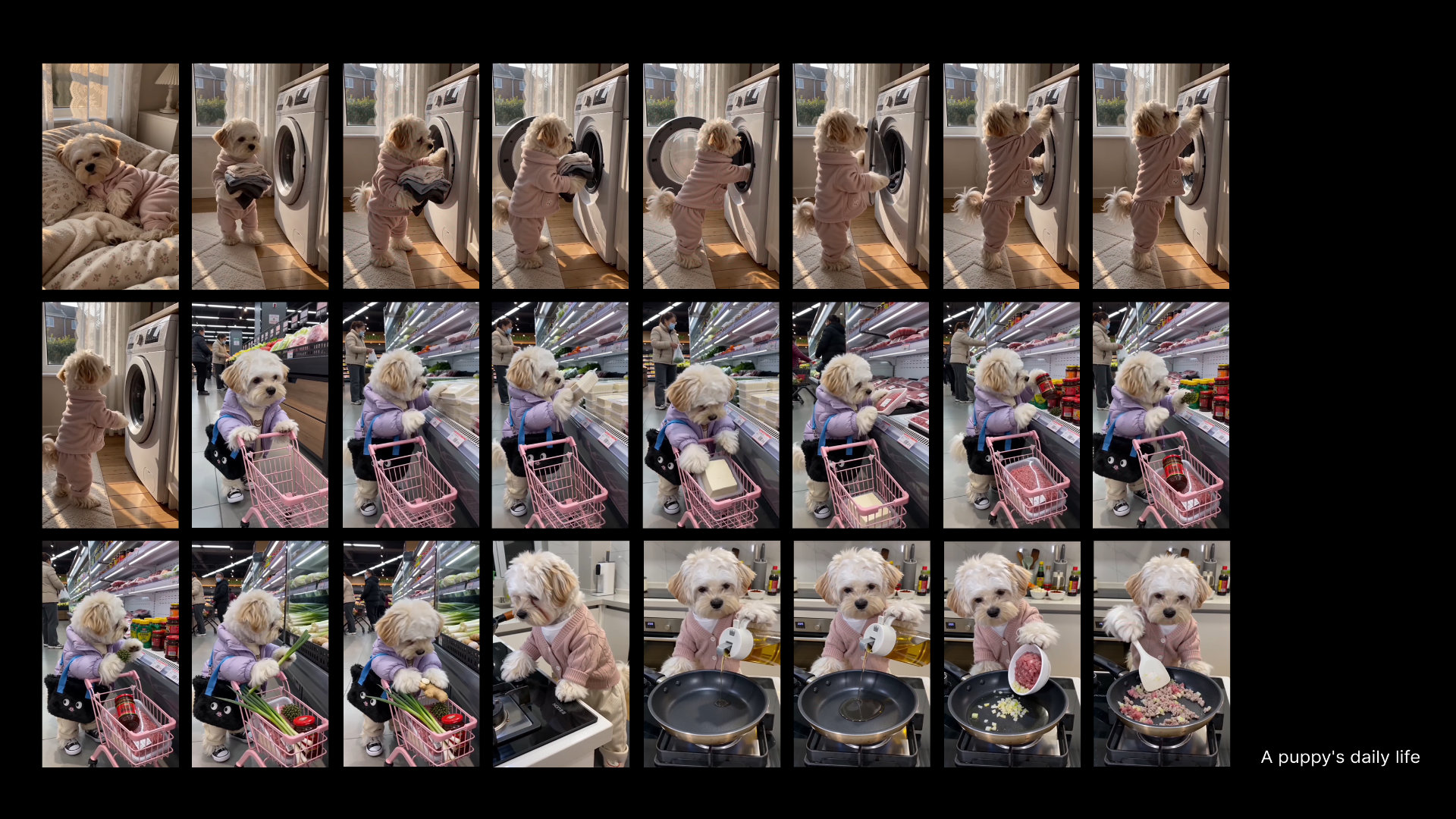
A specific genre of content is currently exploding across Chinese social media platforms — and spreading rapidly to global audiences. Humans write AI-generated scripts, and then have real or AI-generated animals perform human social situations: a cat working the night shift at a convenience store, a dog waking up early to buy groceries for its mother, a kitten rescuing an abandoned child in a subway car, a Shiba Inu sitting at a press conference with a straight face.
These videos follow a precise emotional formula: the animal faces difficulty, the animal tries, there is a tender moment, and then it ends. The whole cycle takes fifteen seconds. Most viewers know the content is artificial. And yet they still cry, share, and comment: "They moved me so much. I feel so bad for them."
This project begins with a question that this phenomenon makes unavoidable: why does the emotion feel real when you know the object is fake? This is not a question about deception. The audience is not being tricked. It is a more unsettling question — one that sits precisely within the territory LAB 5 calls "The Mechanics of Truth": a grey zone in which truth no longer requires facts, only sufficiently effective emotional triggers.
This prototype is developed by a team formed by the author of the initial proposal Weijia Zhu @likidy8864 together with:
Alberto Calderó calde-core.com / @calde_core
Oscar Jané brennkernel.xyz / @brennkernel
Alessandra Gargiulo @aleegargiulo
Gema Barba dreamingtheweb.neocities.org / @soyygema

 Medialab-Matadero Madrid