

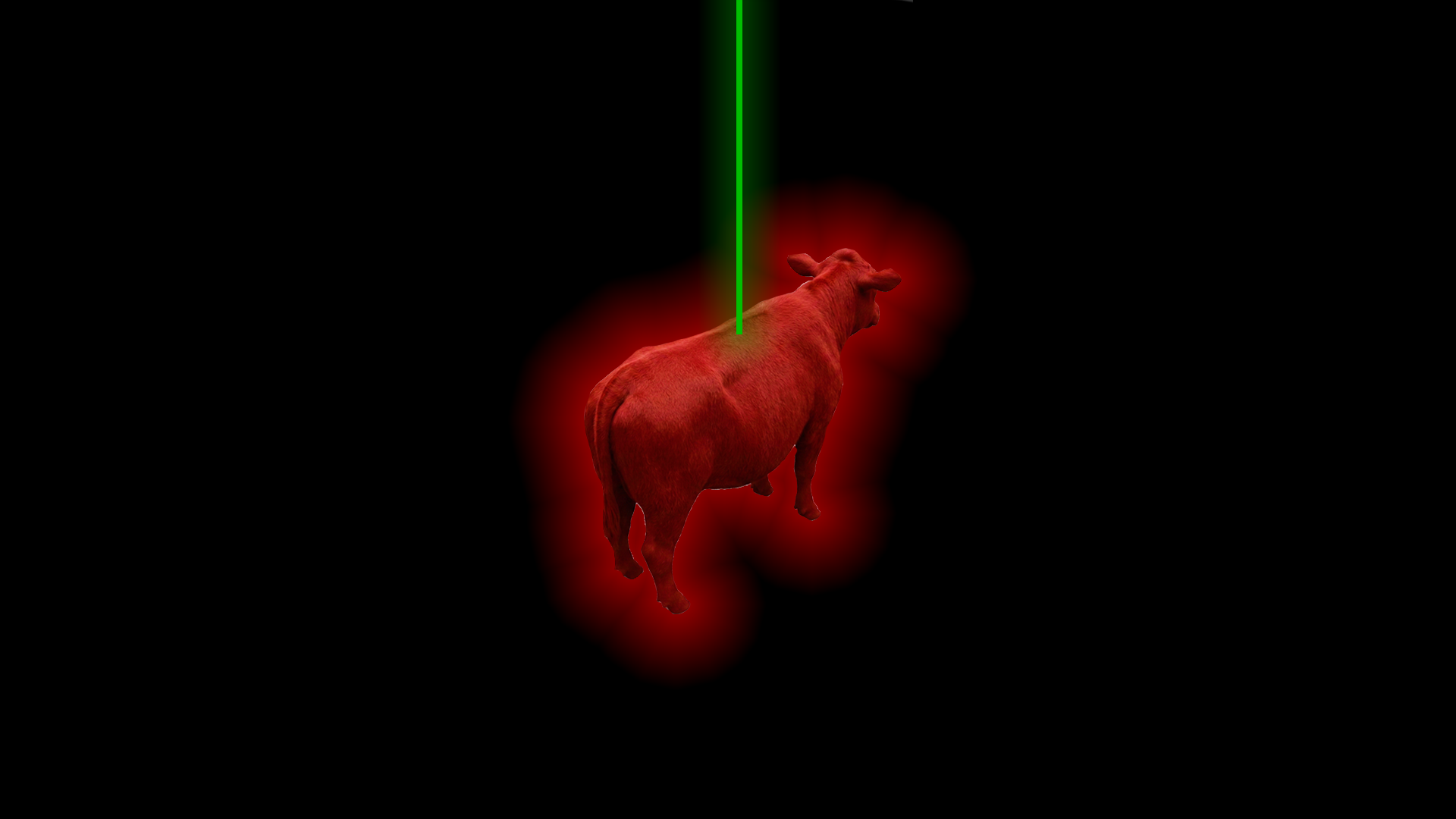
In the age of predictive and speculative media, images not only represent the future, they actively participate in producing it. Renderings of cities, territories, and infrastructures are used to guide genocidal, political and economic decisions, reshaping social, environmental, and cultural realities before they even exist.
Performative lecture by Donatella Della Ratta, Ask Me For Those Unborn Promises That May Seem Unlikely To Happen In The Natural (free for everyone): Thursday, September 24 (7pm)
Workshop (prior registration): Part 1 Thursday, September 24 (4-7pm) + Part 2 Friday, September 25 (11am-8pm)
Where: Nave 17 building, Nave Una room
Language: English and Spanish.
12 spots plus observers.
Price: Free but sign-up is required.
Who is it for: Artists, designers, photographers, architects, activists, journalists, historians and anyone interested in the life and afterlife of synthetic imagery, technological mediations, and colonialism.
We live inside an unprecedented flood of images: generative visuals, synthetic faces, 3D renderings, video leaks, livestreams, surveillance footage, memes. Images circulate faster than our capacity to look at them, let alone understand them. At the same time, we are exposed daily to images of extreme violence, domination, and power, consumed individually yet experienced collectively.
Every image exists in relation to others: images that precede it, images it answers to, images it contradicts or erases. Every image looks back.
In the age of predictive and speculative media, images not only represent the future, they actively participate in producing it. Renderings of cities, territories, and infrastructures, for example, are used to guide genocidal, political and economic decisions, often by actors distant from the places depicted, reshaping social, environmental, and cultural realities before they even exist.
We seek to unpack these relations together, tracing the ethical, political, economic and emotional circuits that connect one image to another, and collectively producing meaning rather than receiving it passively.
Rather than asking whether an image is true or false, we ask: what does it do? what does it connect to? What does it demand from us?
The Colonial Render is a two-day collective laboratory that proposes to slow down the act of seeing, restoring time, attention to our relationship with images. It is one of the first iterations of the broader The School of the Image project by Tafeche and Della Ratta.
Rather than treating images as objects to be consumed or verified, the workshop invites participants to read, dissect, and reconstruct images together, developing a shared toolkit for a predictive media literacy, where meaning emerges collectively rather than being passively received.
The dominant mode of engaging with images today is solitary, fragmented, and accelerated. We scroll alone, react alone, archive alone. This isolation weakens our capacity to think, feel, and act collectively.
The School of the Image proposes a simple but radical shift: seeing is a collective act. Images are not explained by experts, but read together. Meaning does not pre-exist, it emerges through dialogue, friction, and shared interpretation.
The project is inspired by John Berger’s Ways of Seeing, especially his idea that understanding how we see images reveals crucial insights about ourselves and about the historical and political conditions we inhabit. It also draws from Jean-Luc Godard’s notion of shot / reverse shot (notably in Notre Musique), treating images not as isolated entities, but as relationships: every image exists in relation to others, to what precedes it, what it erases, what it answers to, what it contradicts.
In the age of synthetic media — where documentary images coexist with generated ones, and reality is no longer grounded in mimetic representation — Tafeche and Della Ratta shift the focus from authenticity and truth-value to relation.
The laboratory is structured as a collective learning environment where participants work together on selected case studies and on their own chosen images.
Each session is based on shared looking: images are projected, discussed, compared, dismantled, and placed in relation with counter-images, archives, and absences.
Facilitators select and introduce visual materials, but do not provide closed interpretations. The emphasis is on co-presence, collective reading, and critical imagination.
The workshop proposes a practice of cutting into images together, through three main operations:
Images are treated as onions: layered structures that must be peeled, even if this process is uncomfortable.
A central aim of the workshop is to provide what we call the backdrop of images: the set of invisible layers that every image compresses into a single surface. Images are treated as results of an extrusion process: what we see is only the visible output of multiple underlying strata: technical, institutional, geopolitical, social, historical, economic and platform-driven layers (such as virality, hype, and attention economies).
The workshop trains participants to reverse this compression: to extrude the image back into its constituent layers, reconstructing the infrastructures, interests, and power relations that shape what appears as a neutral or self-evident visual surface.
The aim is to resist superficial consumption and to expose the hidden genealogic infrastructures behind images.
1. Conceptual Mapping
Facilitators present a conceptual map organized by:
This visual map functions as a living knowledge system, where images are extruded into their underlying layers, serving as a shared starting point for the group.
2. Case Studies
As ice-breaking game, facilitators propose the group to analyze emblematic and ambiguous visual cases, such as:
This would include 3D visualizations of infrastructures, reconstructions, AI-generated images. Three elements are compared, analyzed together rather than individually, making visible the connections between shot and counter-shot.
Each case will be analyzed through three interrelated components:
Factual components
The aspects of the image that are officially documented or verifiable.
Fictional components
The speculative or imaginative aspects of the image.
Hyperstitional components
The elements that actively prepare the ground for a possible future, shaping expectations, desires, or policies. These images do not merely represent the world; they act as performative instruments, signaling or legitimizing future developments, often in ethically and politically charged ways.
This framework allows participants to read, dissect, and compare images not in isolation, but in relation to each other, revealing the technical, institutional, political, and affective forces that shape visual production and circulation.
Participants trace the genealogy of a chosen image, mapping sources, references, related images, and circulation paths, then translate this research into operative visualizations—diagrams, maps, collages, or visual essays—that reveal relationships, contradictions, and hidden production layers.
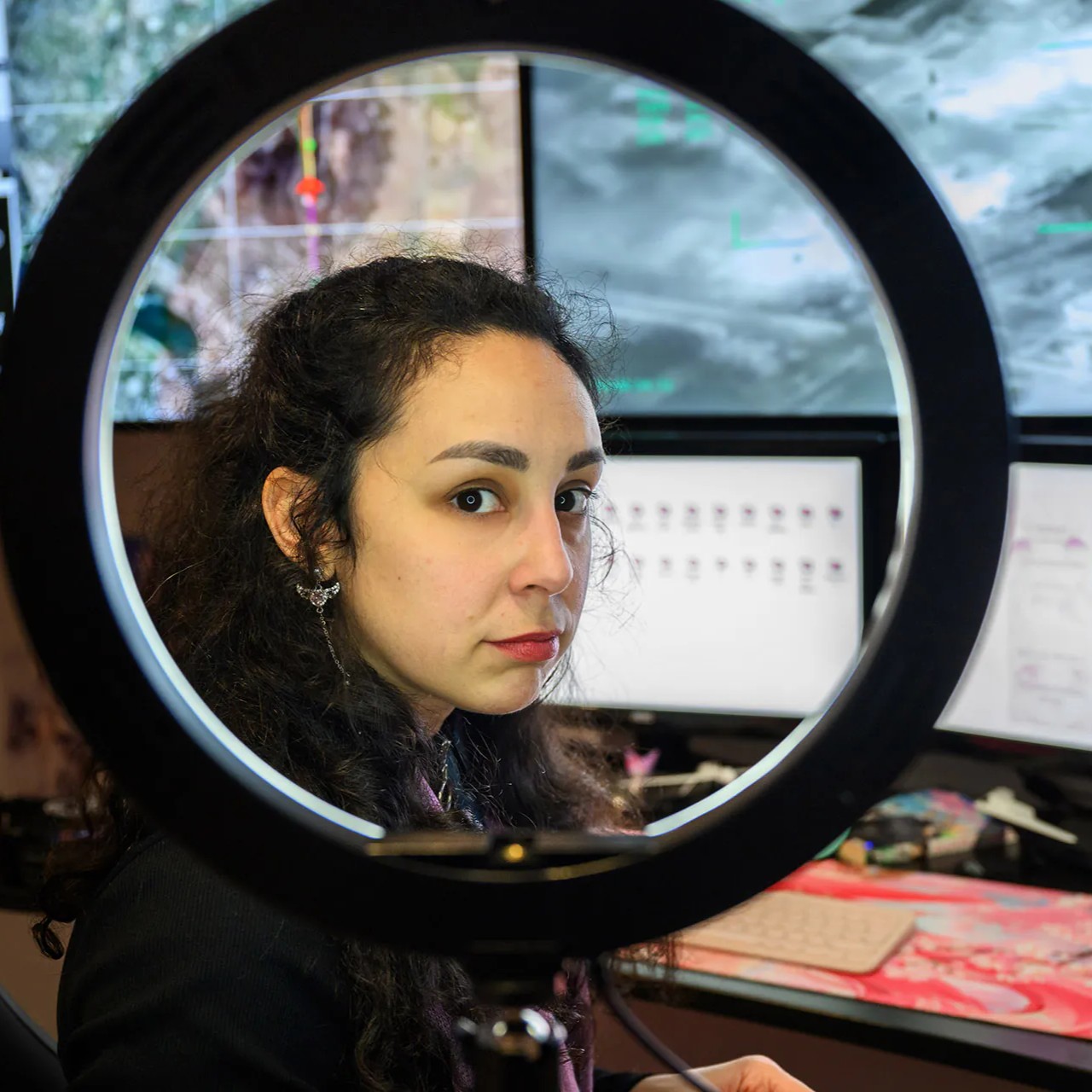
Noura Tafeche is a visual artist, onomaturge, and independent researcher whose practice moves across archival methods, laboratory-based processes, video, installation, neologisms and drawing.
Her research explores visual culture and its techno-political entanglements, with particular attention to digital militarism, online aesthetics, internet hyper-niches, and non-Anglophone meme cultures. She also examines the use of synthetic images in institutional neo-propaganda strategies. Her research project 'The Politics of Rendering' was awarded the Italian Council 2025-2026 grant by the Italian Ministry of Culture.
She has exhibited, lectured, and led laboratories at Aksioma (Ljubljana), Medialab Matadero (Madrid), transmediale (Berlin), Disruption Network Lab (Berlin), Fotomuseum Winterthur (Winterthur), Impakt (Utrecht), Foto Colectania (Barcelona), C/O Berlin (Berlin), Design Museum (Helsinki), Tainan Art Museum (Tainan), Tomorrow Maybe (Hong Kong), TheWrong Biennale (internet), Pirelli HangarBicocca (Milano), Institute of Network Cultures (Amsterdam), and the European Union Representative Centre (Al Quds, Palestine) amongst others. She graduated in New Media Art from the Brera Academy of fine arts, with a particular focus on net.art, however, her most formative experience has been The Influencers Festival, Barcelona.
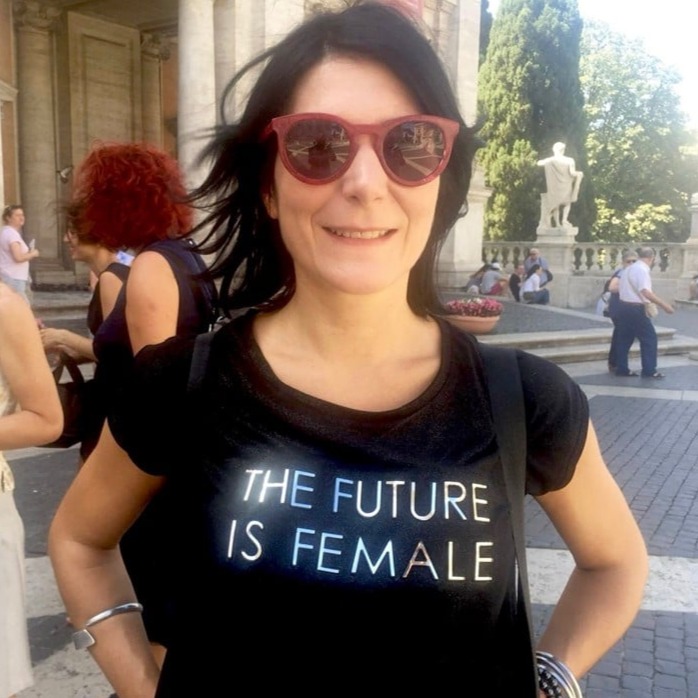
Donatella Della Ratta is a scholar, writer, performer, and curator specializing in Arab media and cultures. She teaches at John Cabot University in Rome and is a former Post-Doctoral Fellow at the University of Copenhagen and at the Annenberg School for Communication, Pennsylvania University, and an Affiliate of the Berkman Klein Center for Internet and Society at Harvard University.
Della Ratta has authored three monographs on Arab media and curated chapters on Syrian media and politics in several collective books. She is a contributor to Italian and international media outlets such as Al Jazeera English, Hyperallergic, Internazionale, and Il Manifesto. She has professional experience as a journalist, TV author and producer, and managed the Arabic-speaking community of the international NGO Creative Commons www.creativecommons.org for five years (2008-2013). She has curated several art exhibitions and film programs on Syria, and she is a co-founder and board member of the web aggregator on creative resistance SyriaUntold, recipient of the Digital Communities award at Ars Electronica 2014.
Her most recent book, Violenza Speculativa, will be released in the Fall 2026.
This is the fourth installment of the 2026 season of Estudio de Sistemas (Study of Systems), a regular program of workshops, talks, and seminars aimed at fostering creative intuition and methodological experimentation around emerging and unstable technologies. It’s part of Medialab’s LAB 5 The Mechanics of Truth thematic program.

 Medialab-Matadero Madrid