

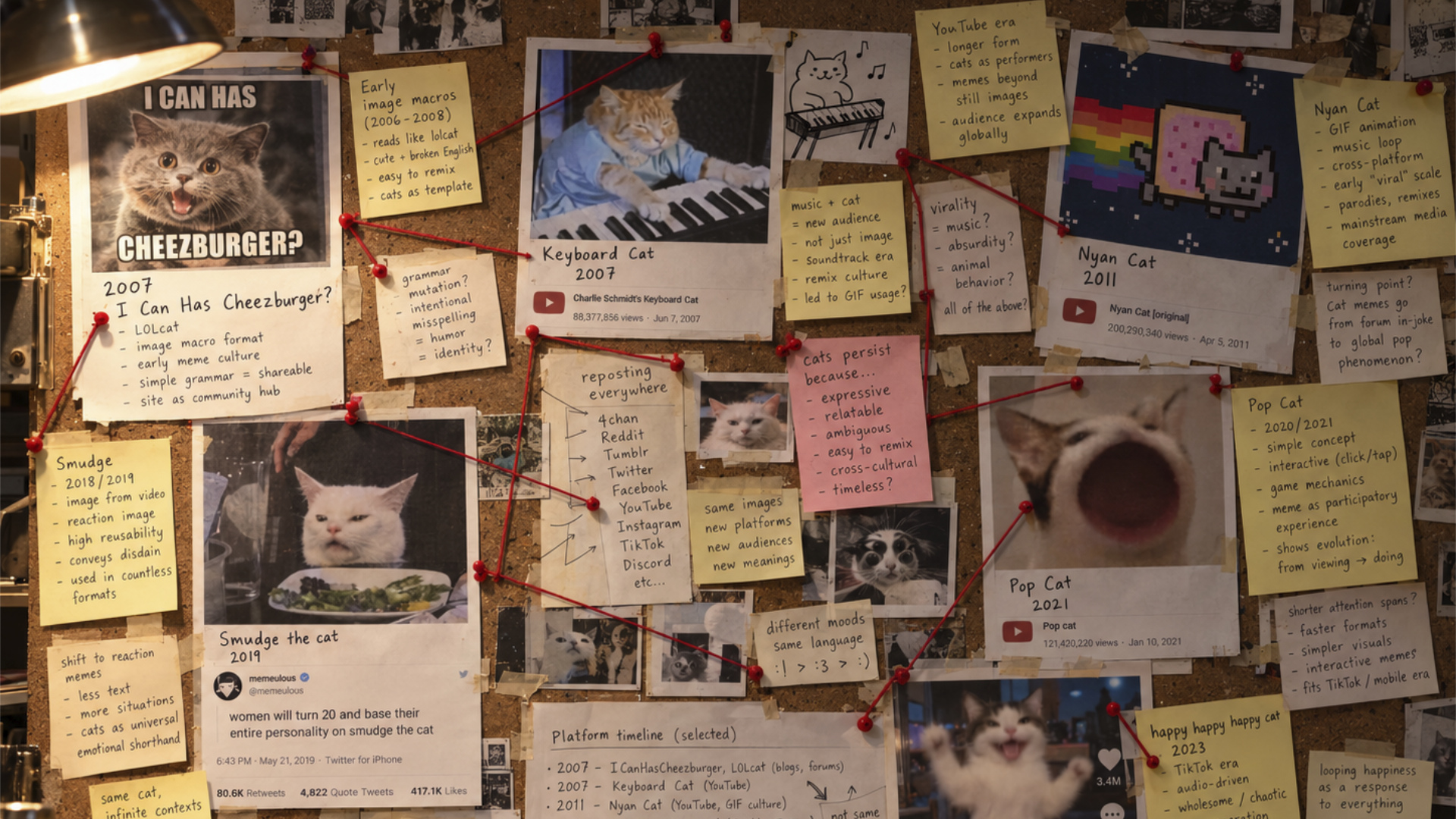
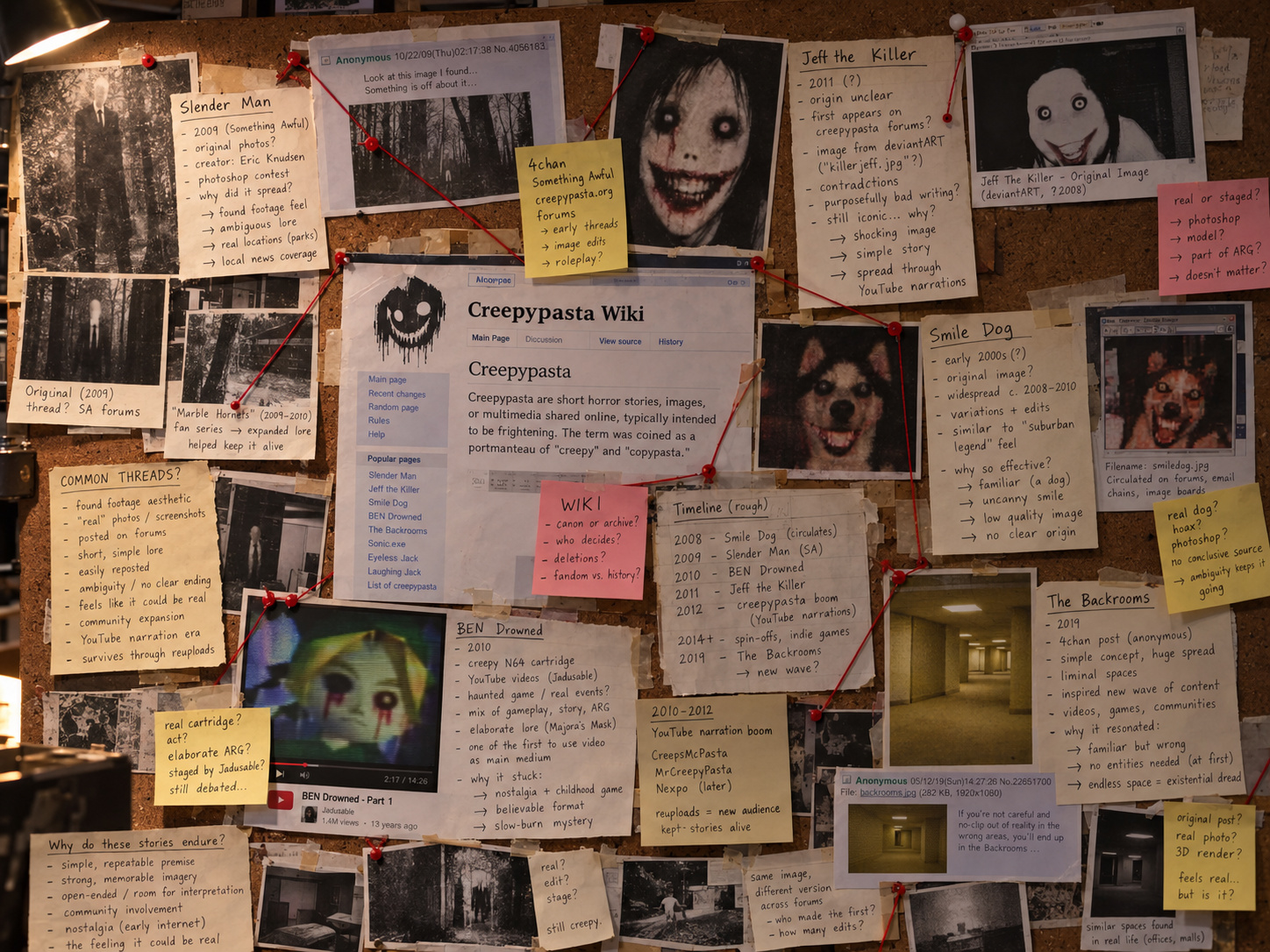
What gets lost when a screenshot or meme reaches us without its history? Platforms disappear, links rot, contexts collapse. Yet memetic fragments keep circulating, accumulating and actualising new meanings wherever they resurface. Internet archaeology starts from these digital ruins and follows the red string backwards, tracking artefacts across platforms, archives and increasingly obscure rabbit holes to excavate their buried contexts and sedimented meanings. Drawing on research on memes, semiotics and Digital Occultism (with Mikkel Rørbo), Publig reads mutation and repetition as clues, without losing sight of the thin line between critical pattern recognition and conspiratorial overconnection.
Performed as a live browser-history session, the talk proposes internet archaeology as both a research method and a practical form of digital media literacy, unearthing traces from slop and slopaganda to memes, political aesthetics and online mythologies. Following an artefact far enough can recover lost contexts, expose ideological genealogies and complicate stories that appear self-evident at first. At a moment when political narratives compete through decontextualised fragments and viral aesthetics, finding out where something came from is one way to resist easy polarisation while taking seriously the messy histories that build meaning. What kinds of truth become visible when we learn how to dig?
This activity is part of the OpenLAB The Mechanics of Truth festival.
Date: Saturday, November 28, 7pm
Place: Nave Una in Matadero Madrid
Language: English with simultaneous translation in Spanish
Price: Free, no registration required
Sophie Publig is a Senior Scientist, lecturer and internet archaeologist at the Weibel Institute for Digital Cultures, University of Applied Arts Vienna. Her research moves across media theory, critical posthumanism, aesthetics and digital cultures, with particular attention to how platforms produce belief, networked subjectivities and political imaginations. Current projects explore the paradigm shift of digital occultism, the post-identity of the Girl Online and the digital unconscious. With Mikkel Rørbo, she co-edited Digital Occultism (Aksioma, 2026).
At Medialab, Sophie is also faculty of the LAB 5 and, together with Mikkel Rørbo, has led the Digital Occultism workshop as part of the Estudio de Sistemas (Study of Systems) program.

 Medialab-Matadero Madrid