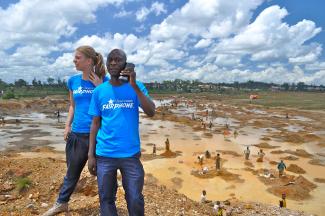
Cell phones are full of different metals. In particular copper, aluminum, iron and nickel, but also gold, silver, tantalum, mercury, lead and a few dozen other ones.
Miquel Ballester, Co-founder and resource efficiency manager at Fairphone will facilitate this workshop and explain how Fairphone is addressing, tackling and solving one step at a time the problems related to the responsible sourcing of this materials, as well as how to reuse and recycle them. Through this interactive workshops you will learn more about the topic in an interactive way and get to know your phones from the
kkk
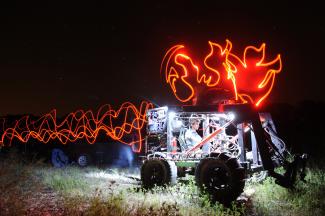
In the workshop, Marcin Jakubowski will involve an audience in an exploration of applying open source principles to the design of real, economically significant products. Open source has so far dominated the world of software, and in this workshop, we will explore the limits of open source in hardware - ie - the collaborative design of open source products that are otherwise currently designed in a proprietary framework by corporations. We will ask what are the barriers to, and the requirements for - a methodology where product design effort is socialized for the benefit of everyone? What
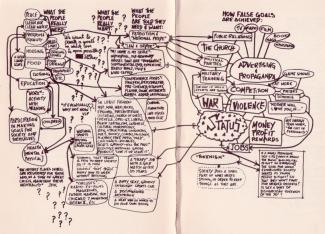
Nos acercaremos a la figura de Victor Papanek, a través de un texto poco conocido: una breve presentación titulada «Twelve Methodologies for Design – Because People Count» que nos servirá como elemento de partida para conocer más al autor, para reflexionar sobre la validez, en la actualidad, de sus ideas y para generar conjuntamente una declaración de intenciones sobre cómo nos gustaría que fuera el diseño en el futuro más inmediato.
El taller se dividirá en dos sesiones. En la primera, hablaremos de Victor Papanek y su contexto y comenzaremos la lectura. En la segunda, comentaremos de
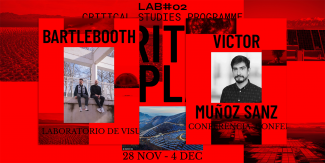
A fundamental aspect of research on digital infrastructures is to visualize their effects on communities and ecosystems. This lab aims to provide strategies to visualize and communicate these processes through models encompassing information from diverse sources: field visits, interviews, municipal archives, aerial images, reports, youtube videos, and commercial brochures.
LABORATORY BY BARTLEBOOTH
12.45 - 2.30 PM
& 4.30 - 7.30 PM
Departing from their research project “Exhausted Soils,” Bartlebooth leads a workshop on visualization models of extractive dynamics of mining and energy
Check the programme here.
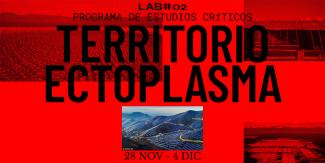
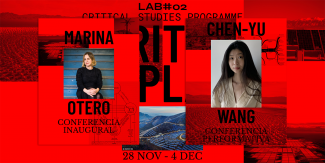
Convened by architect Marina Otero Verzier, Territorio Ectoplasma is a week-long critical studies programme that looks at the territorial dynamics and often overlooked spaces and bodies that sustain the activity of metropolitan centers. In particular, it focuses on the digital infrastructure making possible our datafied, urban life.
In the last decade, the world has experienced unprecedented production and consumption of data. According to International Data Corporation (IDC), global data will grow by 23 percent annually from 2020 to 2025. The data-driven
TERRITORIO ECTOPLASMA INTRODUCTION: WHO WANTS THE CLOUD IN THEIR BACKWARD?
Many of us use phones, computers, streaming platforms, video games, and other services that increase data production and consumption. Many celebrate advances in climate science, healthcare and electromobility, or are excited about developments in AI, the Internet of Things, and the Metaverse. Consequently, we support the opening of new mines, extraction of more resources, constructing more data centers, the production of more batteries and development of more power plants that keep the promises of infinite growth

 Medialab-Matadero Madrid