

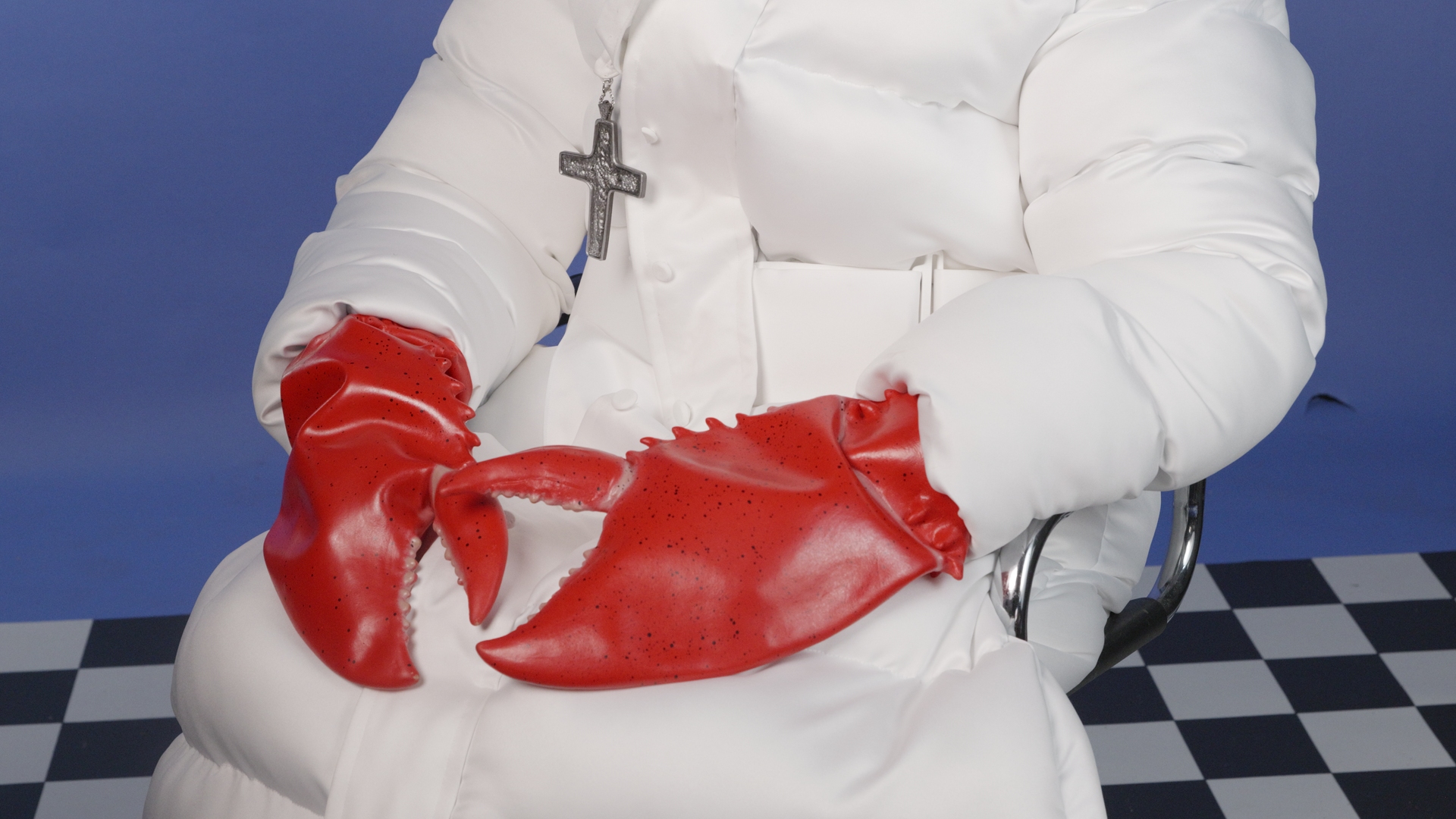
AI Hyperrealism is the first chapter of Anatomy of Non-Fact, a larger art-research project by Martyna Marciniak which examines the aesthetics of visual misinformation in the era of synthetic images. The work focuses on the image of the “Balenciaga Pope” – the AI-generated picture of Pope Francis in a white puffer jacket – which captured the public’s attention and imagination during the so-called “AI-boom” of 2023.
The artist restages the image physically, allowing for a careful examination of the errors and lapses emerging from the flawed generative process. In the exhibition space, the audience becomes confronted with a materialised version of the Balenciaga Pope’s coat – all the impossibilities, lapses and glitches of the synthetic artefact are physically reconstructed, while references to history of visual truth from baroque to recent blobifications of AI-generated images are embroidered in the coat’s lining. Three small sculptural pieces complete the installation.
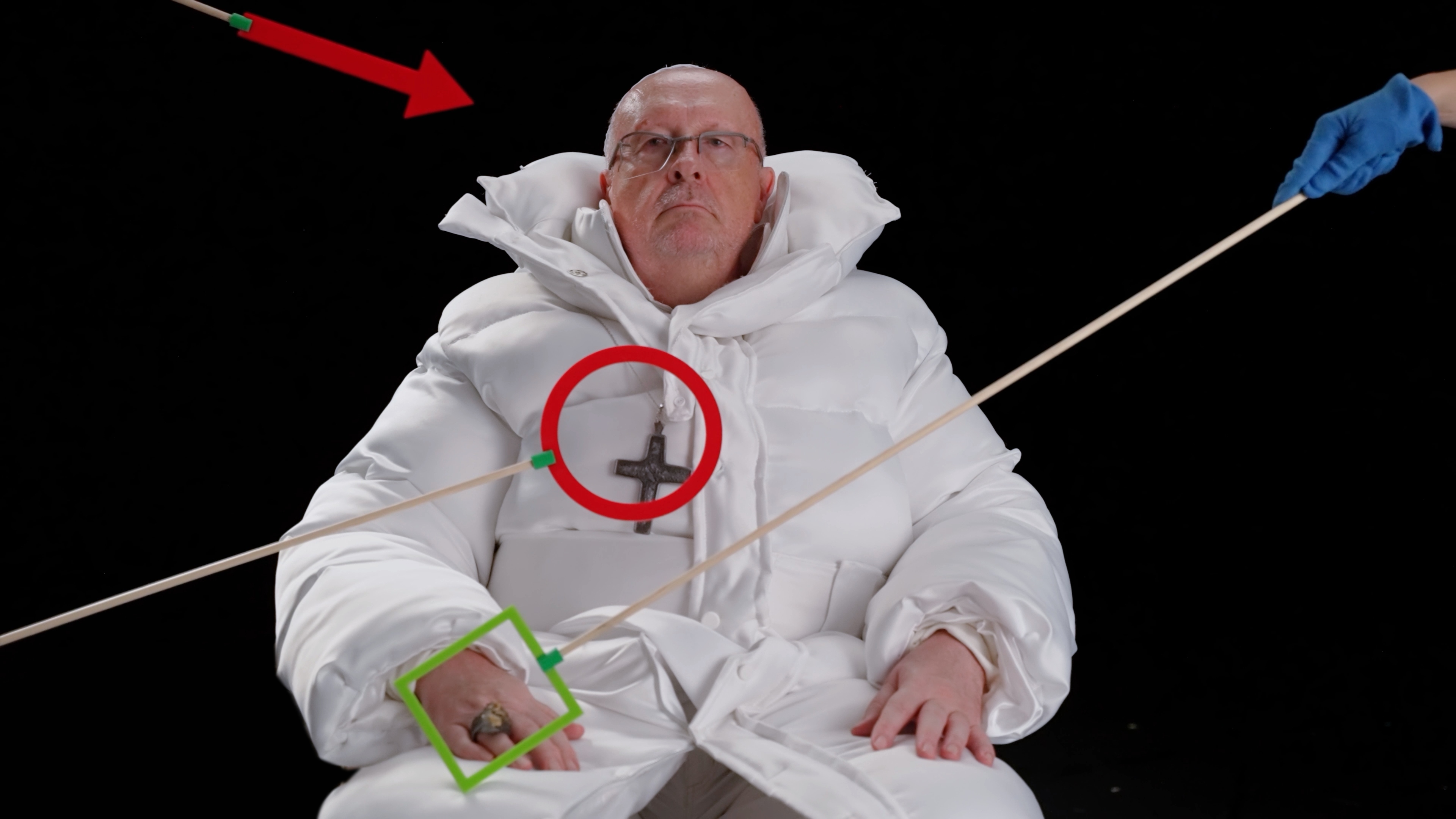
In the 16-minute video, the materialised Balenciaga Pope, played by Derrick Jenkins, delivers a monologue addressing the crisis of perceptive faith, while challenging the viewer’s expectation of authorities of truth and questioning the reliance on photographic images. Sound design and score are by Marco Pascarelli. A custom lexicon of neologisms is woven throughout the work to assist in navigating the emerging visual phenomena in the post-optical era and undoing the anthropomorphisms of AI.
The work debuted at the 2024 Ars Electronica Festival and has since been shown at venues including LABoral Centro de Arte (Gijón), the Onassis Foundation’s Plásmata 3 exhibition (Athens) and Kino Šiška (Ljubljana). In 2025 it received an Award of Distinction in the Prix Ars Electronica.
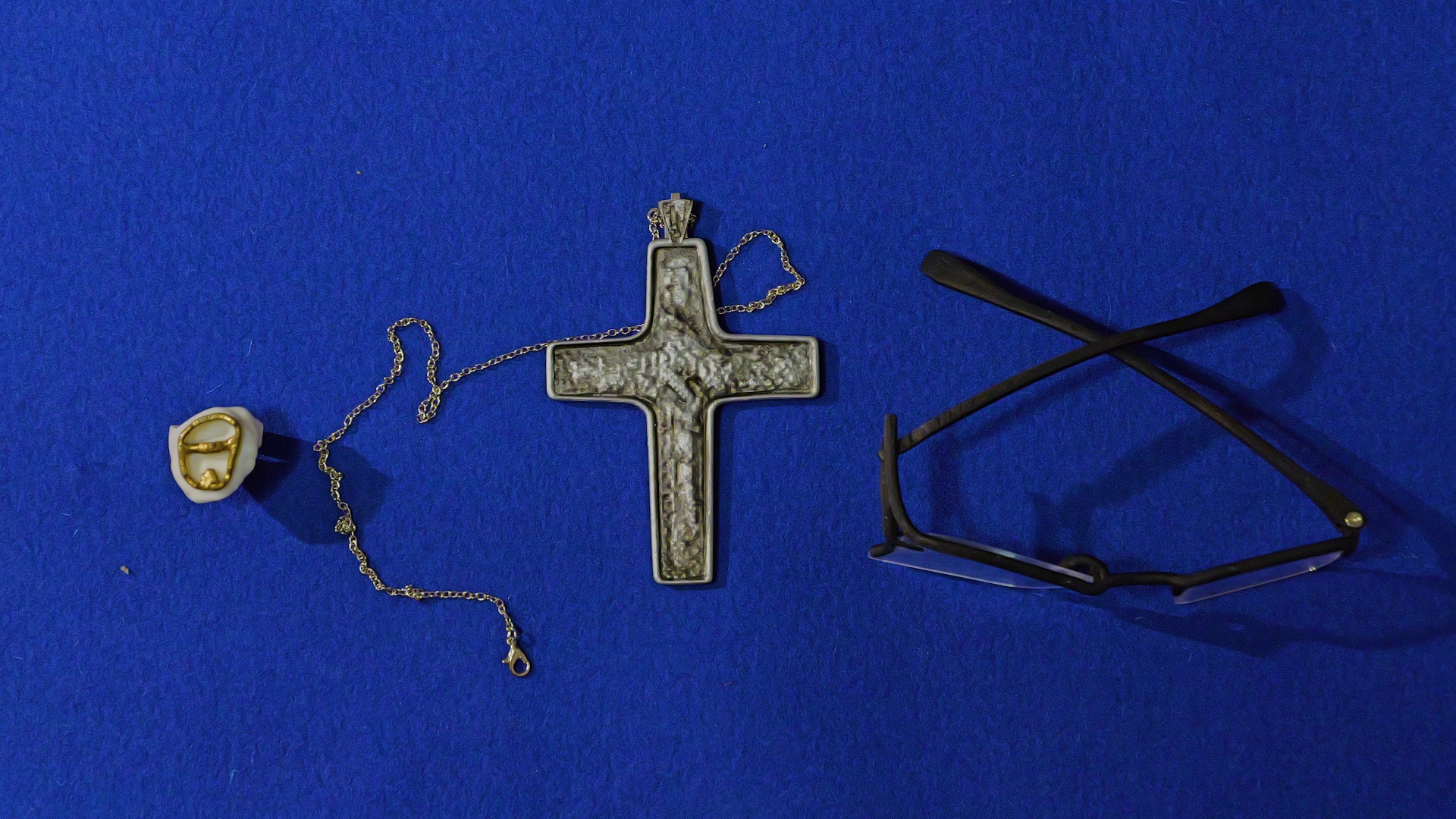
Anatomy of Non-Fact. Chapter 1: AI Hyperrealism, 2024. Video installation: video, 4K single channel with sound, 16 min, and 3 small sculptural pieces.
Martyna Marciniak is a Polish, Berlin-based artist, researcher and 3D designer. Her work is an exploration of visual storytelling, and involves animation, film, writing and model-making.
As a researcher, Martyna uses visual storytelling to draw attention to systemic violence and human-rights abuses. Her art practice relies on speculative fictions and allegory to expose technological and visual biases, while bridging the domains of aesthetics, law, politics and media theory.
She has worked with Forensic Architecture, Amnesty International and Human Rights Watch, among other NGOs. Her co-established research group Border Emergency Collective investigated and documented stories of migrating people at the Polish-Belarusian border. She was an artist in residence at Bauhaus Dessau Foundation in 2018, at Akademie Schloss Solitude in 2024, and at transmediale in 2026. Her work has been shown at the Ars Electronica Festival, Warsaw Biennale, Kinema ICON in Bucharest, Haus Gropius in Dessau and deTour Festival in Hong Kong, among others.

 Medialab-Matadero Madrid