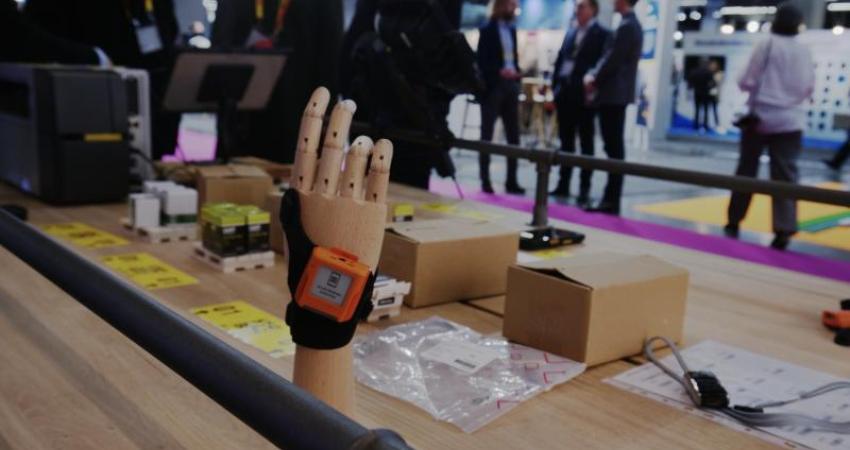
Logistics technology demonstration at a trade fair, Gothenburg, Sweden, 2025. Photo credit: Benjamin Gerdes
Working sessions on the invisibilization of human labor, contemporary logistics, and the cross-border flow of goods, drawing on archival video material produced by workers from ten countries who were invited to document their working conditions across different spaces of the platform economy.
This working group, coordinated by Carmen Lael Hines, is meeting in Medialab in October and November 2026 within the RU – Medialab's Research Unit framework.
Working group dates
Wednesday October 7: 18.30 - 20.30
Wednesday October 14: 18.30 - 20.30
Wednesday October 28: 18.30 - 20.30
Wednesday November 4: 18.30 - 20.30
Saturday November 28: FINAL PRESENTATION (in the framework of the OpenLAB festival)
Sign up
Joining the working group is free prior registration. To sign up, please send a short presentation and motivation letter to hello@carmenlaelhines.com – We recommend joining the group since the first session, but you will be able to join later, too, if seats will still be available.
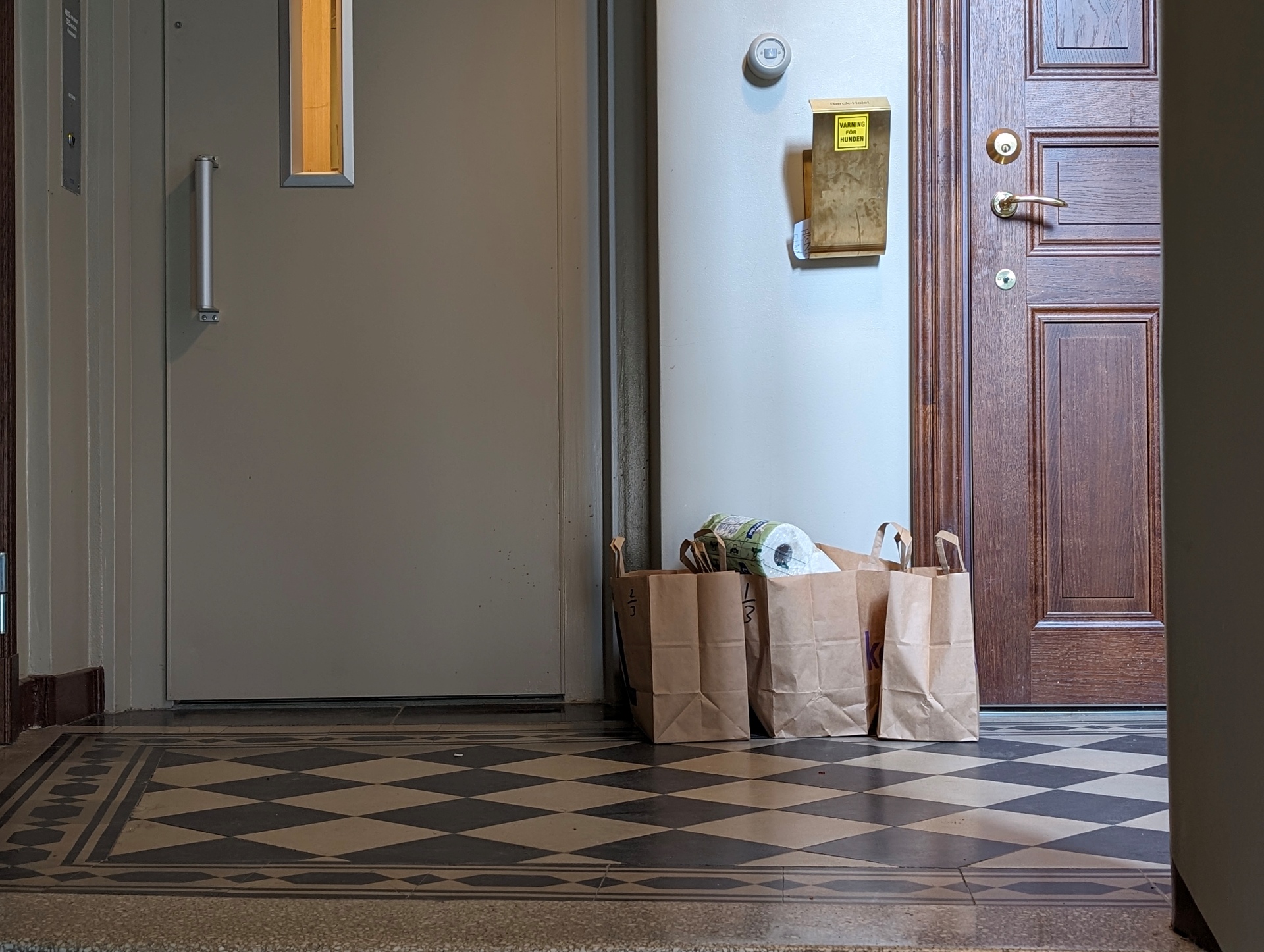
The project Ghost Platform cultivated a network of artists, researchers, and workers to investigate the invisibilization of human labour in contemporary logistics. By providing cameras, software, and computing resources from NAISS (National Academic Infrastructure for Supercomputing Sweden), collaborators were invited to document their working conditions in various sites of the platform economy. The result was a complex collection of images, video recordings, and data on labour and logistics on a cross-border scale.
The aim of Organizing against Invisibility, an evolution of Ghost Platform, is to make this material public and to learn from it. Simultaneously, the curatorial and public nature of the project seeks to explore how such material can be organized and distributed through a platform model that forgoes the communication aesthetics associated with Big Tech platforms (seamless access, interactivity, and adaptability). The project thus addresses the aesthetics of logistics, labour, and cross-border commodity flows.
Organizing against Invisibility traverses an entanglement of deeply urgent topics: AI and theenvironment, platform labour and worker health, corporate accountability and Big Tech, supply chainactivism, the logistics of warfare, and the restoration of public trust via intersectional cultural spaces.
By staging these critical issues in public cultural spaces, the project engages communication and media theory to consider methods for the distribution of digitized video and photo material in a way that promotes solidarity, trust, and non-extractive forms of interaction. Engaging researchers, designers, and programmers, the project seeks to explore strategies for making public the de-visibilized frictions that shape the platform economy and the organized counter-struggles and publics that resist it.
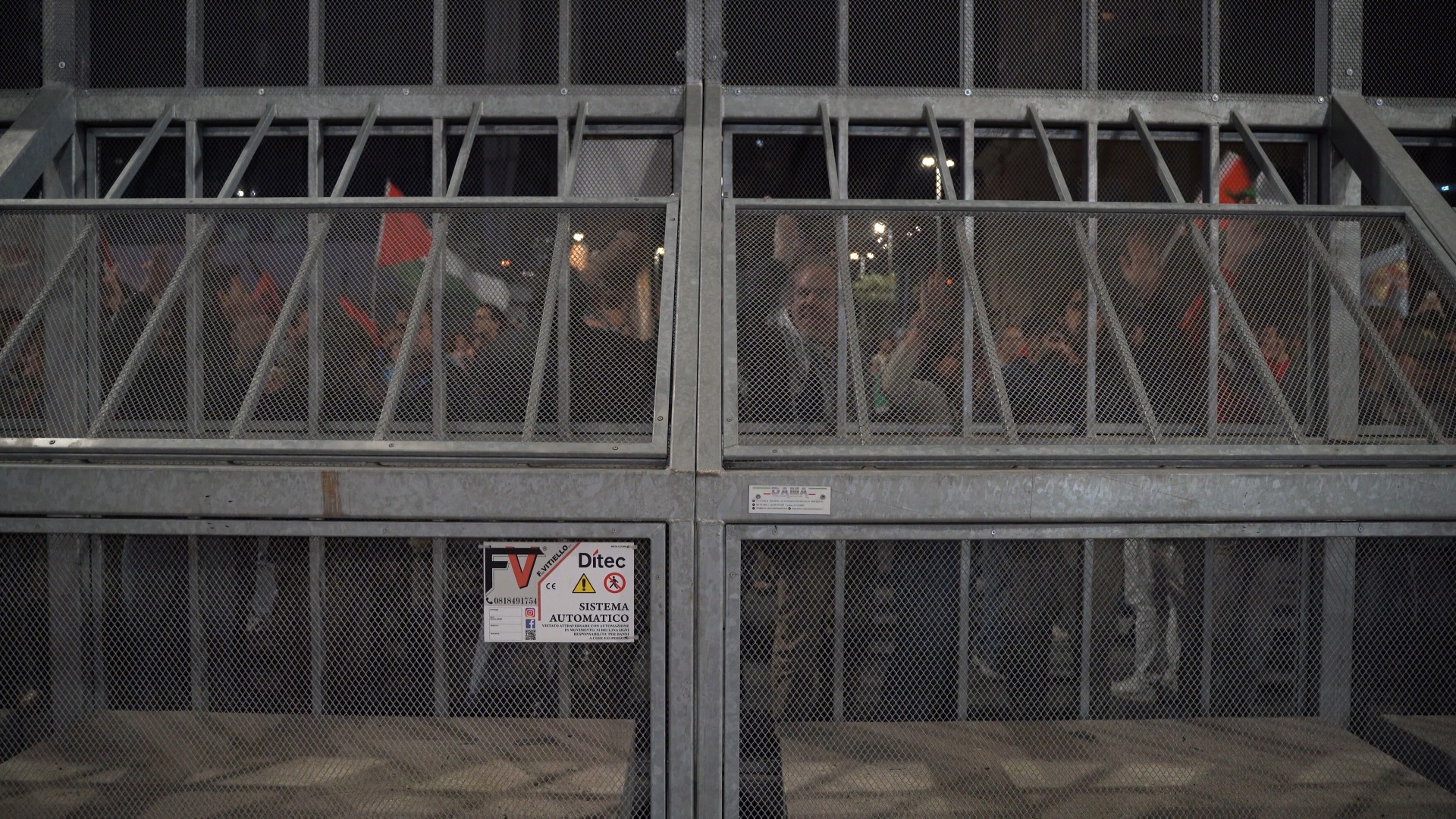
From October 2026, this project will take the form of a working group hosted at Medialab Matadero.
The group will collectively screen and work through the project’s video content, identifying key issues within specific case studies and tracing patterns of conflict, organization, and collective action across these worker-led initiatives. The sessions will also provide a space to develop and experiment with practices for digital archiving.
The group’s main methods will include collective note-taking and visual documentation, alongside the creation of episodic fragments drawn from the video material.
The outcomes of this process will be brought together as a collective project under the name Ghost Platform, to be presented on 28 November at Medialab’s own OpenLAB festival.
Direction and coordination: Carmen Lael Hines
The aim of the working group is to generate original materials by reworking the research produced between 2024 and 2025 as part of Ghost Platform, a research project completed in 2025 and led by Benjamin Gerdes (with research by Felicia Fahlin and visual direction by Fernando Espeso). The project was carried out in collaboration with representatives from various workers’ organizations across several European countries: Si Cobas (Italy), Amazon Workers International and OZZ Inicjatywa Pracownicza (Poland), Confederación Sindical de Comisiones Obreras (CCOO) (Spain), Unión General de Trabajadores (UGT) (Spain), Swedish Dockworkers’ Union (Sweden), SAC Syndikalisterna (Sweden), Villa Medusa Social Centre (Italy), Unione Sindacale di Base (USB) (Italy), and Collettivo Autonomo Lavoratori Portuali (CALP) (Italy).

 Medialab-Matadero Madrid