

Occult language and esoteric imaginaries have become the most adequate descriptors for conspiratorial politics, aestheticized digital cultures, and technological assemblages we find ourselves embedded within. Or, to put it plainly, why everything has become so fucking weird.
Language: mostly English.
15 seats plus auditors.
Price: free, prior registration.
Who is it for: artists, future artists, designers, digital cultures experts, very online people, internectuals, but also activists, journalists, visual and digital anthropologists and, in general, anyone who is into internet cores, digital subcultures, conspiracy theories, or critical media theory.
Two-day workshop aimed at mapping —both theoretically and practically— how occult language and esoteric imaginaries have become the most adequate descriptors for conspiratorial politics, aestheticized digital cultures, and technological assemblages we find ourselves embedded within.
The turn toward occult vocabularies when confronting technology is not a return to superstition but a recurring epistemological adaptation: from Victorian telegraphy feeding séances to 90s cybernetic discourse merging with Gnostic cosmologies, technological advancements have always generated occult interpretations.
Today, users are treating recommendation algorithms as oracles, hashtags operate as spells, and posting equals manifestating. This is the result of specific brands of technocapitalism instantiating postmodern fragmentation as technical architecture.
In this psyberwar condition of deliberate epistemic dispersal, esoteric thinking becomes both adaptation and symptom: the same hyperstitional mechanics that allow fictions to acquire the density of facts also open possibilities for counter-fictional navigation. Occult language is not ideologically fixed — it is a toolkit, and the question is always who deploys it and toward what ends.
Participants receive a short reading list and suggested preparatory material to work through before we meet.
Inputs: Close reading of key concepts from the book including hyperstition and operative fictionality; the psyberwar condition and epistemic fragmentation; meme magick and egregore formation.
Format: Rotating between short input sessions, close reading, and discussion.
Goals: Shared theoretical vocabulary that allows Day 2 to be more than intuition-driven; active discussion; attention to specific questions.
Inputs: Brief methodological session at the start. What does it mean to work within a digital occult framework?
Format: Participants work individually or in small groups on projects, prototypes, or content informed by Day 1’s framework. This could be speculative writing, visual/aesthetic work, research design, curatorial concepts, or anything else. There will be two rounds of feedback sessions (before and after the break.
Goals: Concrete outputs or developed project directions that participants leave with.
Outputs: Short presentations at the end of Day 2; optional collective document or are.na channel gathering materials from across participants.
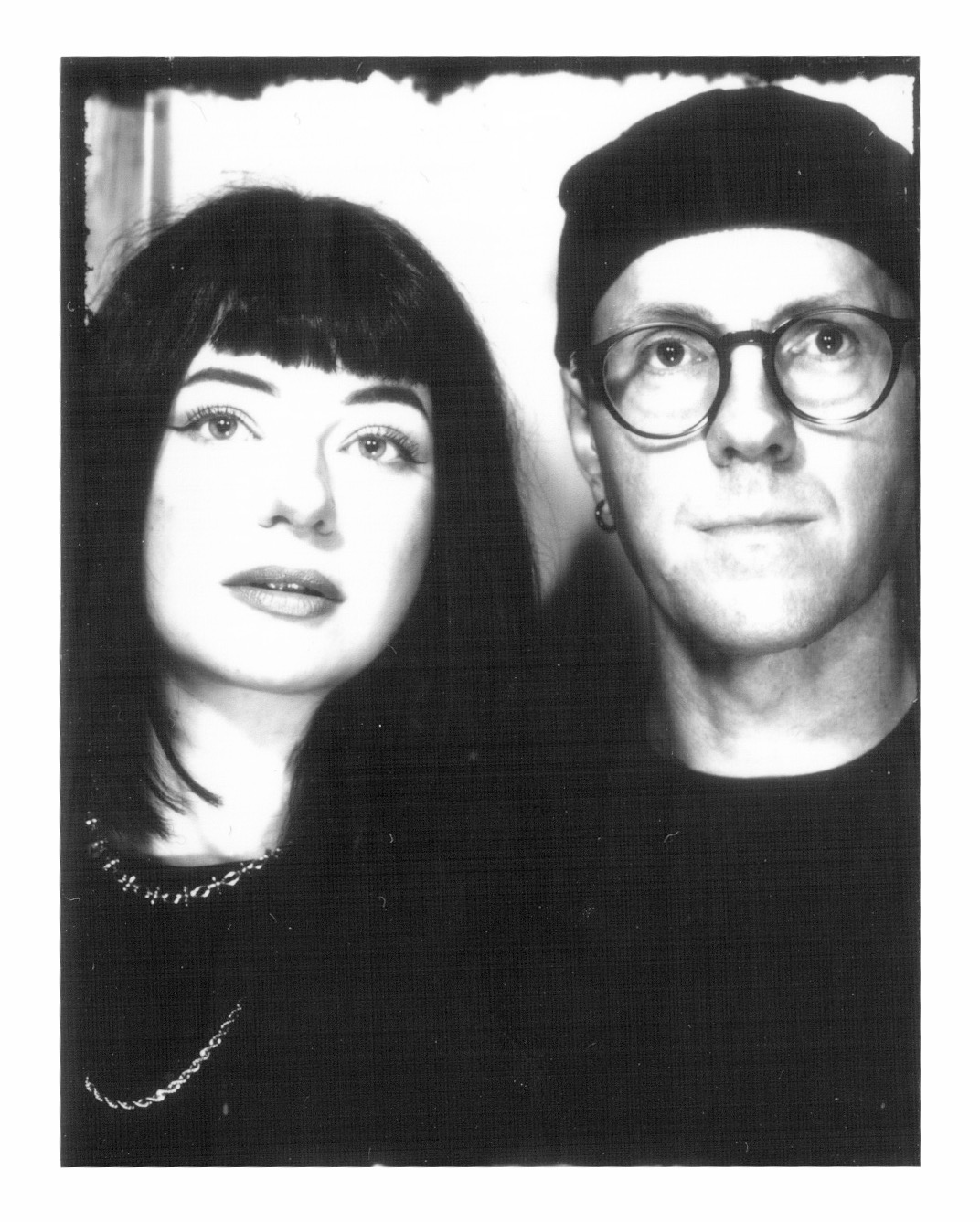
Sophie Publig is a Senior Scientist, lecturer, and internet archaeologist based at the Weibel Institute for Digital Cultures, University of Applied Arts Vienna. Her research moves across media theory, critical posthumanism, aesthetics, and digital cultures, with particular attention to how platforms produce belief, networked subjectivities, and political imaginations. Current projects explore the paradigm shift of digital occultism; the post-identity of the Girl Online; and trajectories of the digital unconscious across platform cultures. Her latest book, co-edited with Mikkel Rørbo, is a collection of essays about Digital Occultism (Aksioma, 2026).
Mikkel Rørbo is an interdisciplinary researcher and producer of cultural detritus. He is currently a PhD researcher at the Weibel Institute for Digital Cultures at the University of Applied Arts in Vienna, where his work is centered on questions of difference, agency and time as they manifest in and connect to such topics as machinic cognition, otherness and political potentialities. He is currently teaching on digital occultism and its place in technopolitical culture.
This is the sixth installment of the 2026 season of Estudio de Sistemas (Study of Systems), a regular program of workshops, talks, and seminars aimed at fostering creative intuition and methodological experimentation around emerging and unstable technologies. It’s part of Medialab’s LAB 5 The Mechanics of Truth thematic program.

 Medialab-Matadero Madrid